Primofort runs HP Multi Jet Fusion on the same climate-controlled Dongguan floor as our SLS and PolyJet lines — HP PA 12, consistent mechanicals in volume, and the only process on this site where the machine's own maker publishes real per-material accuracy numbers.
The honest version. MJF earns its place for a specific reason — repeatable, documented accuracy in production volume — and it is the wrong tool outside that lane.
Same starting point as SLS — a powder bed, built layer by layer — but a different way of fusing each layer. That difference is why MJF gives consistent mechanicals and fine detail in volume.
A carriage lays down a thin, even layer of PA 12 powder across the build bed — the same starting point as SLS.
Rather than tracing the cross-section with a laser, print heads jet a fusing agent onto exactly the area that needs to become solid. An infrared lamp then passes over the bed and fuses that area — every layer, the same energy, the same way.
The finished block cools under controlled conditions, then parts are excavated, de-powdered and bead-blasted clean. Unused powder is sieved and blended back in.
MJF's material line-up is narrower than SLS by design — HP certifies a small set of powders per machine so the tolerance tables below actually hold. Looking for the nine SLS nylons, including carbon-fibre and biocompatible grades? Those are on the materials page, not here.
The material behind the tolerance tables on this page — HP's most widely used and best-documented MJF powder.
More impact-resistant than PA 12, at a wider tolerance band — see HP's published figures below.
Glass-bead-filled PA 12 for higher stiffness — HP publishes a tolerance table for this grade too.
Every other tolerance figure on this site is a service-bureau convention — "typically achievable," not a machine specification. HP is the exception: for PA 12 on the Jet Fusion 5200 series, HP tests and publishes exact tolerance bands by part size, in its own documentation.
| Nominal size | 0–30 mm | 30–50 mm | 50–80 mm |
|---|---|---|---|
| GeneralStandard process | ±0.25 / ±0.42 mm | ±0.30 / ±0.50 mm | ±0.37 / ±0.60 mm |
| With HP 3D Process ControlClosed-loop process monitoring | ±0.17 / ±0.25 mm | ±0.20 / ±0.30 mm | ±0.23 / ±0.37 mm |
HP publishes comparable tables for PA 11 and PA 12 Glass Beads at the same three size bands, with wider bands for PA 11 and a mixed picture for PA 12 GB depending on axis. Ask our engineers for the full breakdown for your material.
HP's Jet Fusion machines are not one size — the model matters. Never assume the 380 mm figure applies to every system.
The full-height envelope — X × Y × Z in millimetres.
Same X/Y footprint as the 4200 and 5200 series, but a shorter 250 mm build height — check Z clearance before assuming a part fits.
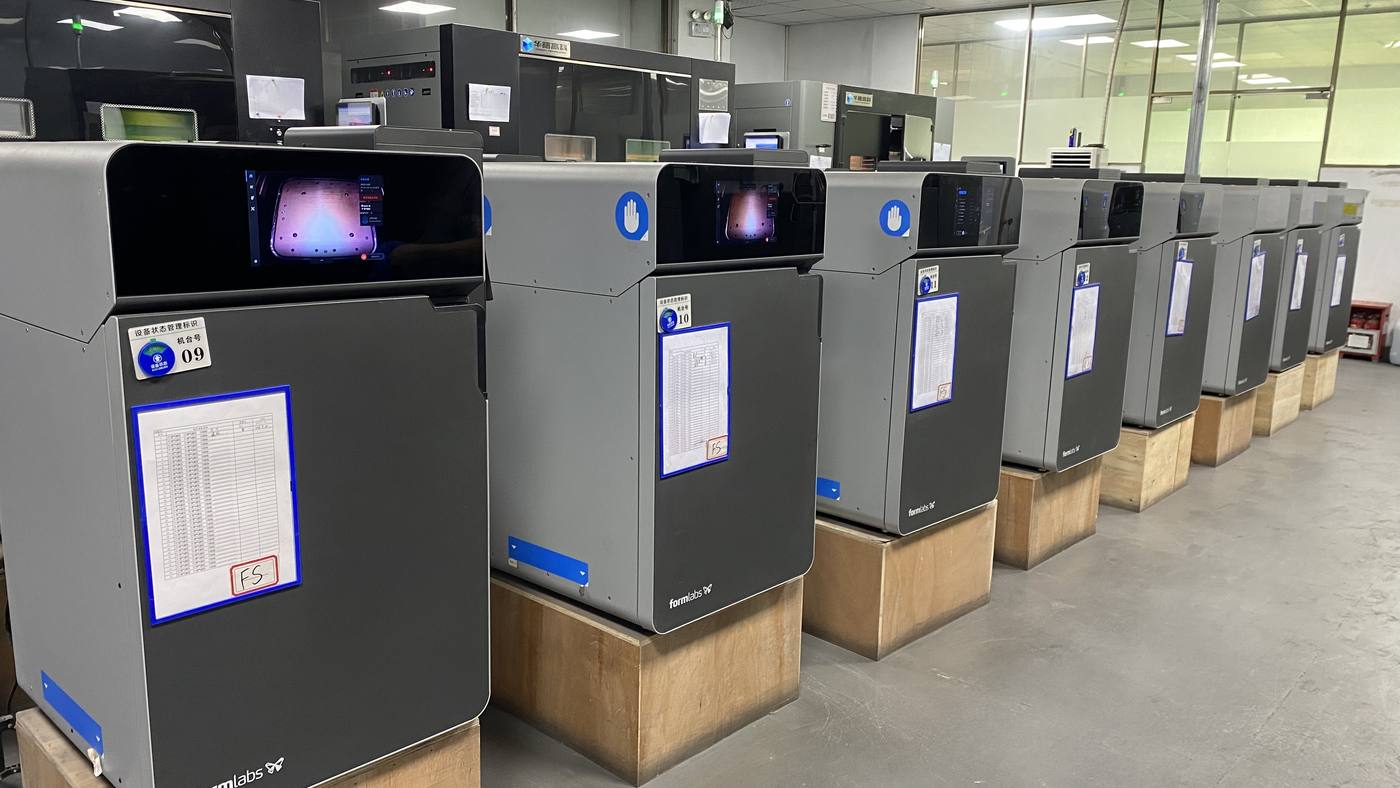
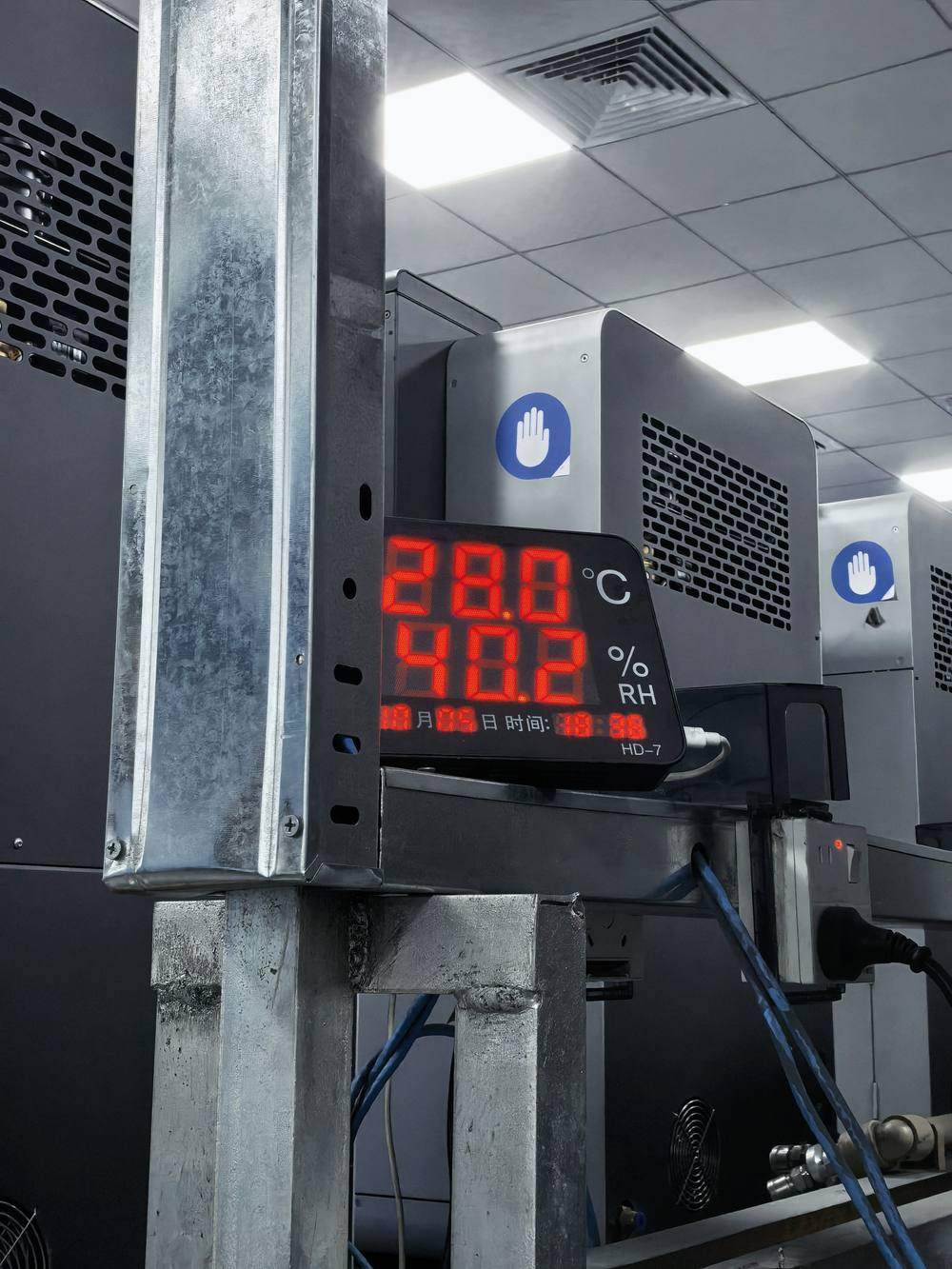
These photographs were taken on our production floor in Dongguan — the same floor that runs our SLS and PolyJet lines. No HP machine photograph is available for this page; we show the floor context instead of substituting another brand's machine.
HP
Stratasys
Send your part and an engineer replies within 24 hours — no auto-mailer, no obligation.